Welcome the Bees With a Pollinator-Approved Yard
How to help the pollinators
Vital to our planet, we owe a lot to these honey-making heroes – they're one of the most important pollinators of our food crops, so it's about time we started looking out for them. By introducing the right plants into your yard, you can offer a year-round pollen feast for our buzzing friends, and in turn, watch your foliage thrive. Follow these clever garden ideas to create an oasis for our buzzing friends. Click or scroll for more...
Hack a bee hotel

Invite bees into your yard by recycling an old wood pallet and adding natural materials you probably have lying around into a cool bee hotel. You need some basic woodworking skills, a saw, nails and a hammer, some waterproof wood varnish plus some chicken wire. We think it looks bee-autiful!
Embrace variety

Create a cottage-style space that will lure pollinating insects in again and again by planting flowers of different sizes, shapes and colors. There are over 4,000 species of bee in the US, each with varying pollen preferences, so the more variety of plants in your yard, the better.
Sponsored Content
Plant plenty of purple

If you want to plant an enticing yard, there are some foolproof shades you should stick to. Nobel Prize-winning scientist Karl von Frisch discovered bees could see color, with their base hues consisting of ultraviolet light (invisible to humans), blue and green. So when you're next in the garden center, keep blue, purple, pink and white tones in mind to attract pollinators. Lavender, foxglove, heliotrope and crocus are all varieties they love!
Find native foliage

Native plants are those that are domestic to a certain area and ecosystem. Because bees from particular regions evolve alongside local flowers, it makes sense that they would have a preference for native species. US native plants have a more localized presence. Check out Native Plant Finder for a list of state-specific varieties.
Enjoying this? Check out these easy gardening hacks to take the grind out of growing
Become a beekeeper

More and more of us are becoming residential beekeepers. Enthusiasts should take a course with a local organization who can provide a good grounding in caring for bees. In the long term, beekeeping can help advance conservation efforts, increase local pollination and even earn you a bit of money on the side – you could even set up a honey stall at your local farmers' market.
Sponsored Content
Create plenty of shade

Bees need shade just like we do. Create plenty of ground-level cover with floor-hugging leafy shrubs like hostas and coleus, or establish a beautiful natural canopy that you can enjoy too by installing a wooden pergola on your patio or deck and growing natural climbers such as honeysuckle, passion flower or wisteria – all of which have aromatic blooms packed with pollen and nectar.
Set up watering spots

Arrange flowers in clumps

Have you ever watched a bee hovering from one flower to the next? As they work, they prefer to feast rather than snack, and those little pollen saddlebags on their legs can account for 30% of their body weight so they don't like to fly far between stops. Flowers clustered into groups according to species will attract more bees than individual plants scattered around the yard.
Sponsored Content
Select single-petal flowers

Introduce tubular plants

Equally as appealing are open tubular-shaped flowers such as foxgloves, honeysuckle, penstemons and snapdragons, where long-tongued bee species can feed sheltered and undisturbed inside the floral bells.
Pledge to go pesticide-free

Bees hate chemical pesticides as they can be weakened and even killed by them either by simply walking over the sprayed petals or ingesting contaminated pollen and nectar. Aim to have a pesticide-free yard by using natural alternatives and by encouraging pest eaters such as ladybugs and spiders into your yard.
Sponsored Content
Make your own mini meadow

Why not turn a corner of your yard into a meadow with long grass and wildflowers? While it's tempting to cut back perennial plants such as grasses as the summer season comes to an end, those hollow stems and undergrowth are the ideal habitat for bees and other pollinating insects to nest and larvae to overwinter.
Let herbs bolt

When herbs have seen better days, don't pull them out, instead let them bolt. Bolting is when plants grow quickly and set seeds. Bees are particularly attracted to herb foliage thanks to their aromatic scents and vibrant colors. Chives, lavender and oregano (to name a few) all produce bee-friendly pink and purple flowers – some are edible for humans too.
Buy ready-mixed seed packets

Even novice gardeners who don't know their rose from their ranunculus can create pretty pots and full flower beds that bees will enjoy. Mixed seed bags especially selected for pollinators are available from garden centers and online retailers. Whether you want to be organized and grow perfect patches of the same species or go freestyle with a seed bomb explosion of wildflowers, there's a box of seeds to suit every type of yard.
Sponsored Content
Create a continuously flowering yard

Some bees hibernate or die off altogether during the winter but others, like the honeybee, work all year long. They survive mainly on honey stores, but with milder winters and seasonally flowering yards and parks, winter pollinators are no longer an unusual sight. Stagger your planting for year-round blooms. As well as the usual summer flowers, grow daffodils, hyacinths and bluebells in spring and choose snowdrops, crocuses and winter primroses for colder months.
Grow flowering fruits and vegetables

If your yard has a fruit and vegetable patch, no matter how small, consider flowering types such as tomatoes, runner beans, strawberries and raspberry bushes. The bees' pollination will provide a bumper crop, and the pollen and nectar are said to be sweeter for our buzzing friends too.
Feature fabulous nesting spots

You don't necessarily need a large yard with long grass and woodpiles to create somewhere for bees to nest. This birdcage has been filled with pebbles and wrapped in ivy. It's shady, dark and cool with plenty of little nooks to crawl into and it won't take up much space in a small garden. Plus it looks as beautiful to us as it does to the bees – win-win!
Sponsored Content
Add secret hiding places

A contemporary bee block will provide a safe and unobtrusive little nest for bees. Unlike wooden insect hotels, this design won't rot as it's made from white cast concrete, plus it'll look the part in landscaped and urban yards. It can even be incorporated into a wall or fence.
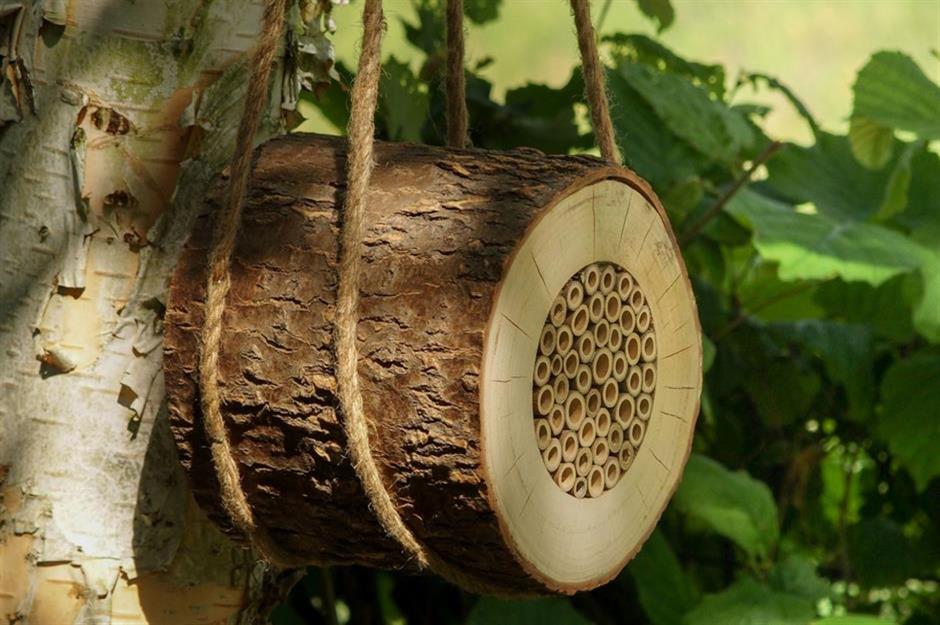
Hang a bee log

For a more natural alternative, a bee log makes a beautiful nesting place. It's specially designed to attract the Red Mason bee and the Megachile bee, neither of which sting, making it safe for yards with children and pets. The tubes are made from drilled canes and provide ideal cavities for bees to lay their eggs, while the bark surround acts as organic insolation throughout the winter.
Leave off the lawnmower

Good news for some – research by the USDA Forest Service has concluded that mowing the lawn less frequently can significantly improve the habitats of bees. Mowing every three weeks resulted in as much as 2.5 times more lawn flowers such as dandelions and clover and attracted a greater diversity of bee species. Dandelions are a superb pollen source for bees during winter months when there are fewer flowers available – so leave those weeds alone for as long as you can stand it.
Sponsored Content
Buy a bee-friendly hanging basket

Courtyards, terraces or even planted-up balconies can attract bees too. Position pots or hanging baskets in both sunny and shady spots, fill them up with a pollinator's favorite flowers such as lavender and dianthus and listen out for the familiar buzz as bees stop by.
Download a pollinator app

Bee enthusiasts can now use technology to plant the perfect yard that bees, butterflies and other pollinators will love. There are several apps that can help you select specific native plants from a vast database.
Enjoyed this? Check out these easy gardening hacks to take the grind out of growing