Inside the remarkable home lives of America's Old Order Amish
Lives frozen in time

A unique pocket of American history, the Amish might easily be mistaken for historical reenactors, with their horse-drawn buggies, 18th century-style attire and complete rejection of all modern technology.
However, this subsect of the Mennonite Church has chosen to embrace the simple life in the 21st century, relying on traditional crafts and workmanship to produce their own clothes, food and, famously, furniture.
Click or scroll to discover the fascinating home lives of the American Amish…
Jakob Ammann

The Old Order Amish Mennonite Church was established in North America in the late 17th century among the followers of Jakob Ammann, a Mennonite leader whose extremist teachings had caused a schism among his peers in Switzerland, Alsace and southern Germany.
Communities of adherents of Ammann’s controversial beliefs began to spring up across Switzerland, Alsace, Germany, Russia and Holland, and by the 19th and 20th centuries, a significant migration to North America began.
North American migration
The Amish initially settled in eastern Pennsylvania, where the largest community remains today. However, in 1850, the community suffered a large schism between the “new order,” who accepted societal change and technological advancement, and the “old order,” who did not.
Tensions arose, and over the course of the next 50 years, roughly two-thirds of the Amish settlement dispersed into separate, smaller churches or joined larger branches of the preestablished Mennonite church.
Sponsored Content
American diaspora

The remaining “traditional” Amish are officially the Old Order Amish Mennonite Church, which today is comprised of roughly 250,000 members living in more than 200 Old Order Amish settlements across the United States.
While the largest settlement remains in Pennsylvania, there are also communities established in Ohio, Indiana, Iowa, Illinois, Kansas, Wisconsin, Maine, Missouri, Minnesota and Florida.
All settlements are divided into church districts, with a community structure centred around autonomous congregations capped at roughly 75 members.
Old Order Amish living

Amish settlements are reclusive by nature, bound together by the values of humility, family, community, and a strong sense of isolation from the outside world. The traditional Amish eschew all modern technology, meaning no telephones, washing machines, dishwashers, electric lights or space heaters.
Indeed, home life for the Old Order Amish is almost exactly as it would have been in the 1800s, with wood-burning stoves, gas lamps, handmade clothes, and hand-hewn furnishings.
Community and family first

These and many other strict rules which govern the Amish way of life are all laid out in the unwritten code of conduct known as Ordnung. Community members who break these rules may become victims of shunning, the traditional practice wherein the offending member is cast out by the community.
While many youth partake in a year of freedom from the rules of Ordnung, a rite of passage known as rumspringa, during which they are allowed to experience regular 21st-century life, most return to their communities and are baptised.
Sponsored Content
In-home services
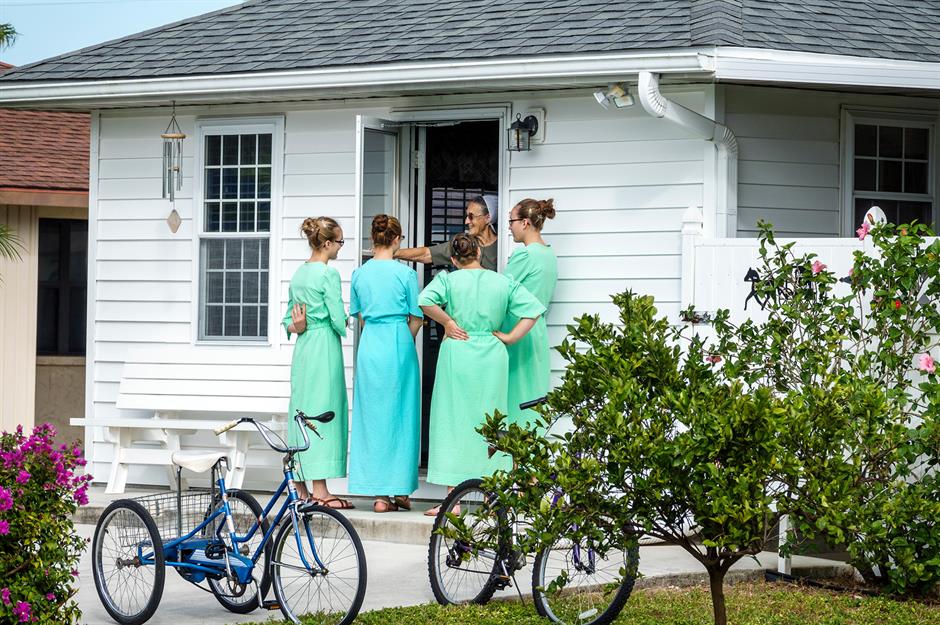
While religion plays an enormous role in the Amish way of life, their communities don’t have churches; instead practising worship in each other’s homes.
Each district has a bishop, two to four preachers and an elder, and community members take it in turns to host services in their homes or barns. A large wagon filled with benches for the congregation and dishes for the meal, which traditionally follows the service, is pulled from host property to host property.
Amish homes

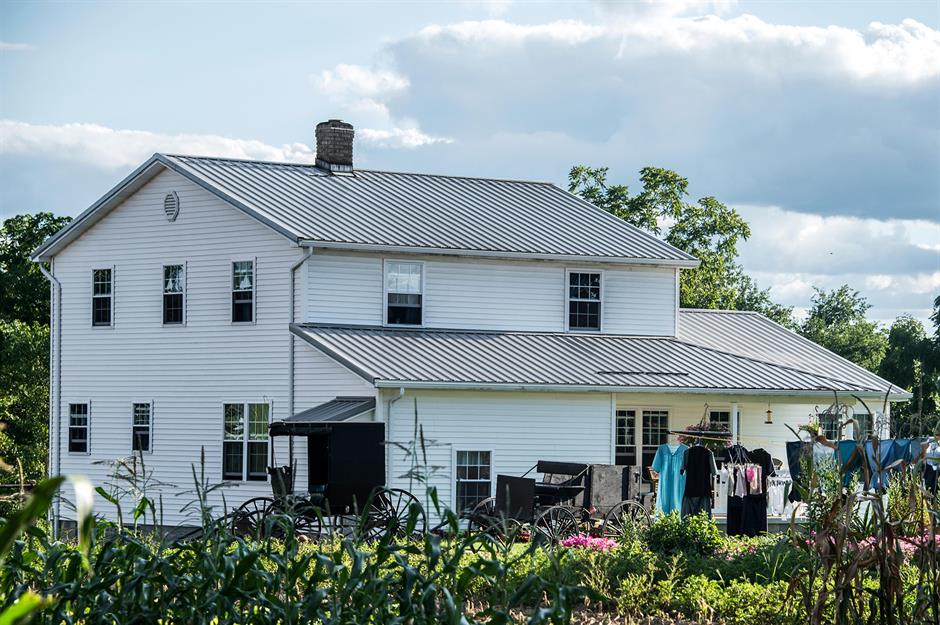
Amish houses are usually quite architecturally distinctive, generally made from natural materials such as wood and stone. These houses are large but simple in their design, usually covered in white siding and featuring a porch or deck.
There is often a detached barn close to the house, and a flower garden or vegetable patch on site as well. It is not uncommon to see laundry blowing in the wind or smoke coming from the chimney in the absence of electric washing machines or heaters inside.
Keeping it simple
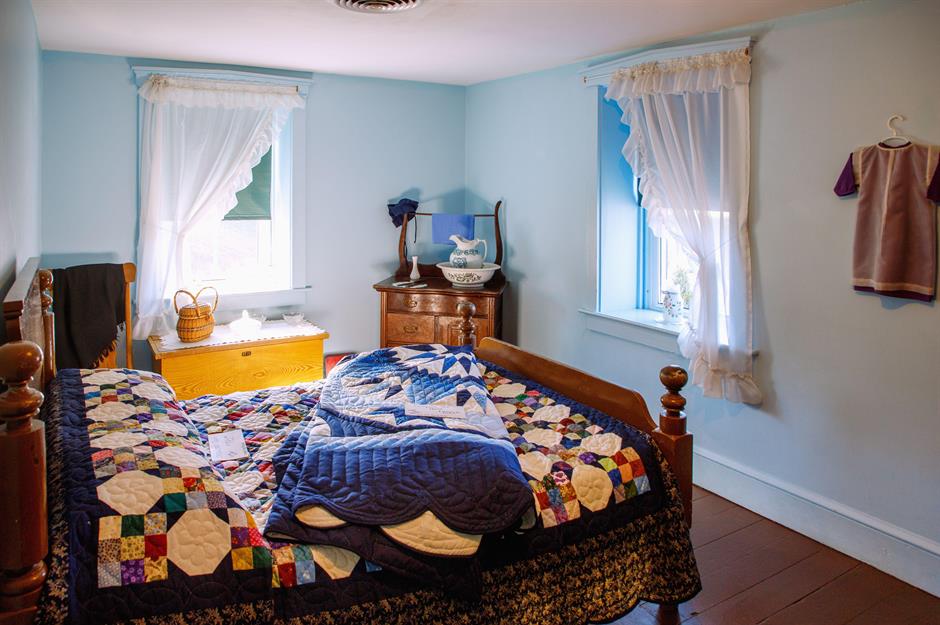
These homes are designed to accommodate large families, with open-plan first floors for cooking, dining and relaxing, and bedrooms upstairs. Walls are usually kept free from pictures and adornments, and are painted in a high gloss to facilitate washing down to remove coal and woodsmoke residue.
Hardwood floors throughout are also designed for ease of mopping without the convenience of a vacuum. Most appliances in the home run on gas, while an icebox is used instead of a modern freezer.
Sponsored Content
Electricity workarounds
In the most traditional Amish communities, water is supplied by means of either a well powered by a windmill or from a tank set on a hill above the property, accessed by a combination of gravity and a hand-operated pump.
These homes also have outhouses rather than modern bathrooms. Due to the lack of air conditioning, many families spend hot summer months in their basements, and do as much cooking as possible in outdoor ‘summer kitchens’ to keep the heat away from the house.
Amish schools
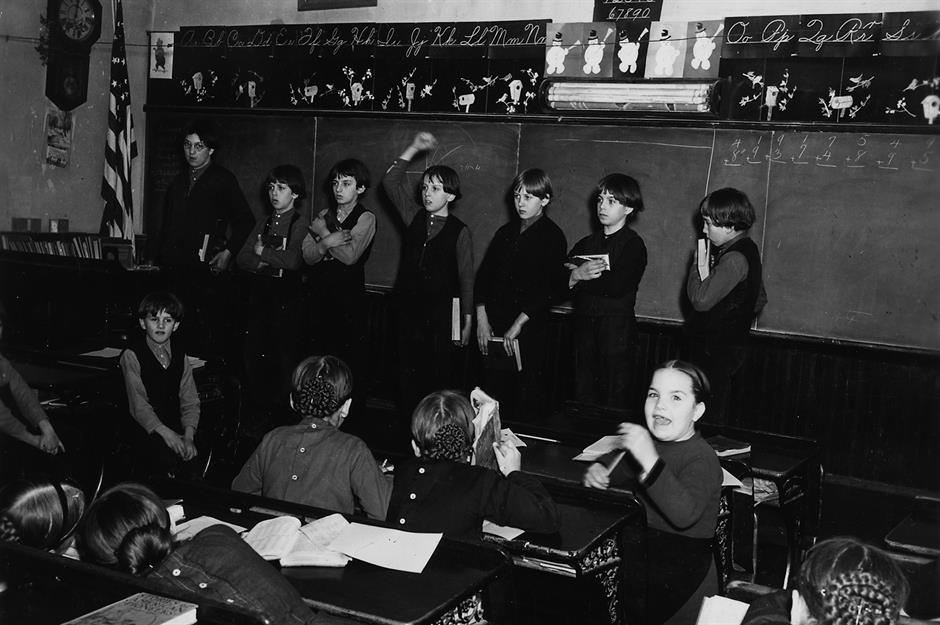
The services themselves are held in High German and Pennsylvania Dutch, and the Amish speak a combination of this, various German dialects and English in their daily lives.
Children are educated in English, typically in one-room schoolhouses, which they attend only through the eighth grade. From this point on, children leave full-time education to join their parents at work, a practice which was granted special permission by a Supreme Court ruling in 1972.
In addition to the basics of reading, writing and mathematics, children also study practical farming and homemaking skills.
Work and play

Chores also play a significant role in children’s lives, helping their parents with farmwork or housework after school. After chores and homework are completed, families often come together to read or sing in the evenings. However, the playing of musical instruments is also forbidden, as it is considered too “worldly.”
Hymn singing is particularly popular among the younger Amish, and a separate hymnal with faster tunes known as the “thin book” is reserved specifically for this purpose.
Sponsored Content
Women's clothing

The Old Order Amish are immediately recognisable by their distinctive clothing, most of which is homemade from plain cloth after simple fashions. Women and girls wear long dresses with capes over their shoulders, shawls and black stockings and shoes.
Amish women are forbidden jewellery and never cut their hair, instead keeping it pinned back in a bun and under a bonnet. As the strictures of their faith do not permit zippers, these clothes are fastened with buttons, hooks, and occasionally snaps.
Men's attire
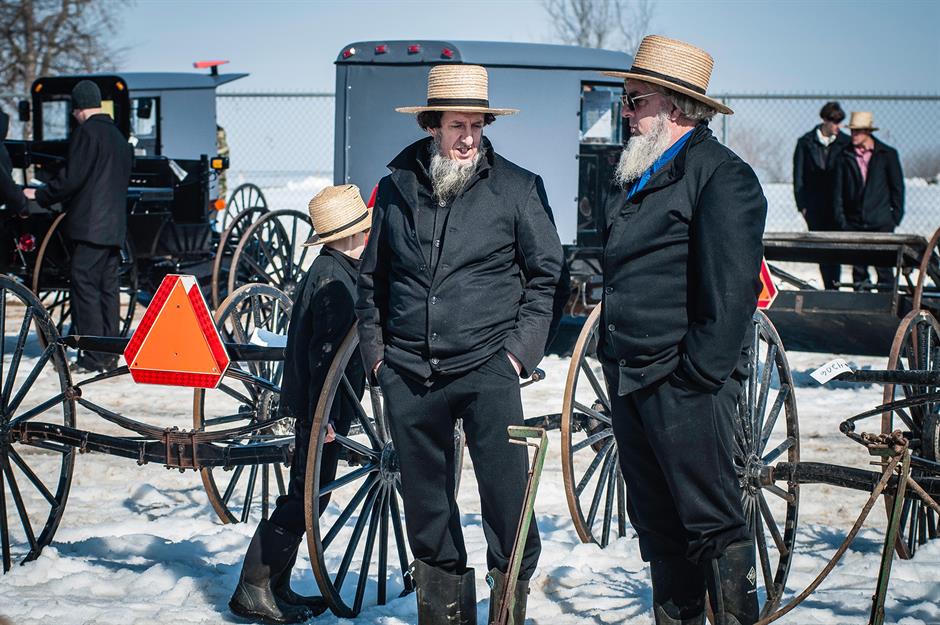
Men and boys wear dark suits, straight-cut coats without lapels, suspenders, solid-coloured shirts, and black socks and shoes. Perhaps the most distinctive feature of the male attire is the broad-brimmed black hat worn over short hair.
While men grow beards after they marry, they are forbidden moustaches. The attire worn by both men and women is largely unchanged from the days of the faith’s formation in the 17th century, designed to represent the community’s commitment to tradition and the importance of humility.
Agrarian lifestyle

The Amish are predominantly a farming community, producing most of their own food themselves, and only relying on grocery stores for staples such as flower and sugar.
Due to their eschewing of all modern technology, Amish farming techniques have evolved very little since the 17th century. Where contemporary equipment is required, the Amish often rely on alternative power sources rather than electricity.
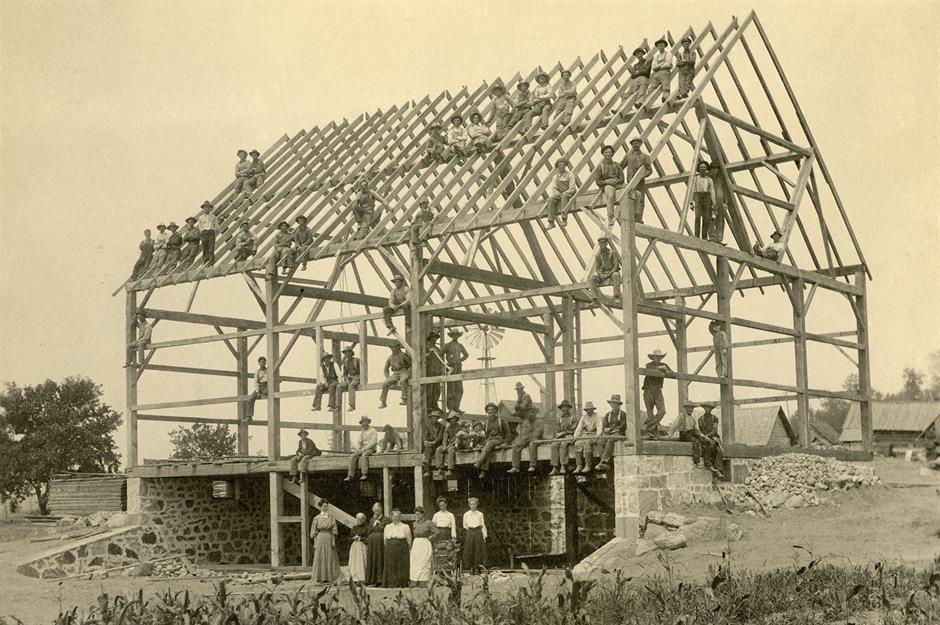
Barn raising, too, is done entirely by hand in a famous Amish tradition generally requiring hundreds of men.
Sponsored Content
Barn raising

A barn is a necessary structure for any farmer, for storage or keeping animals, but they are a large and costly structure. To assemble one takes more labour than a typical Amish farm family has, so barn raising brings the community together to work en masse.
Pre-cut timber is assembled on the ground, often using traditional methods like mortise and tenon joinery with wooden pegs. The crew works together to raise the framed walls from a horizontal to a vertical position. This requires many people to lift and secure the structure.
The hard work is often followed by a large meal for everyone.
Buggy transport

Of course, all modern forms of transport, such as cars, buses, and trains, are not permitted. Instead, Old Order Amish famously travel in horse-drawn buggies.
While these buggies are most typically black in colour, they can also be painted various hues to distinguish different Amish and Mennonite groups, and customised with conveniences such as windshield wipers, upholstered seats and even heaters.
These buggies can be found driving down public roads and highways in areas near Amish settlements, occasionally with reflective panels or blinkers for modern-day road safety.
Quilting

In addition to their farming prowess, the Amish are also culturally revered craftsmen, known in particular for their quilts, which have been praised by collectors and which are highly popular with tourists in Amish country.
These quilts are produced by Amish women and girls, often in official quilting bees, which are formed as a type of social club for relaxation and community bonding.
Colourful and intricate, these quilts represent a strong source of income for Amish families, but are also made for use in Amish homes, like the one pictured here.
Sponsored Content
Furniture-making
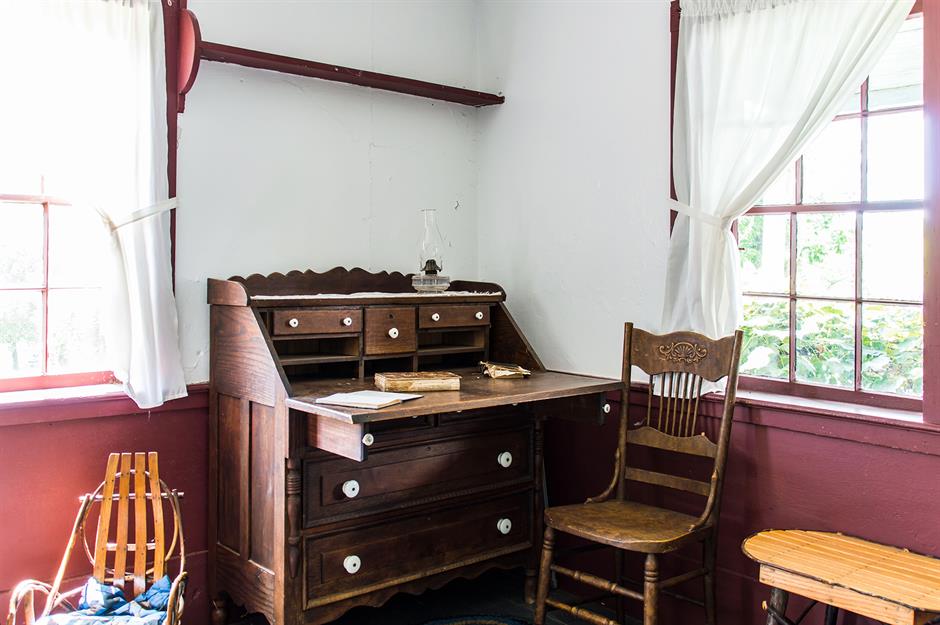
The Amish are well-known furniture makers, praised for their craftsmanship and simple, elegant designs. Unlike most furniture, which is mass-produced in factories overseas, Amish pieces are all handmade using techniques which have been finely honed over centuries using the highest quality materials.
Most Amish furnishings are made of wood such as oak, cherry, maple and walnut, and are designed to be long-lasting, with practical form taking precedence over unnecessary adornments, like the beautiful desk pictured in an Amish home here.
Family-style living
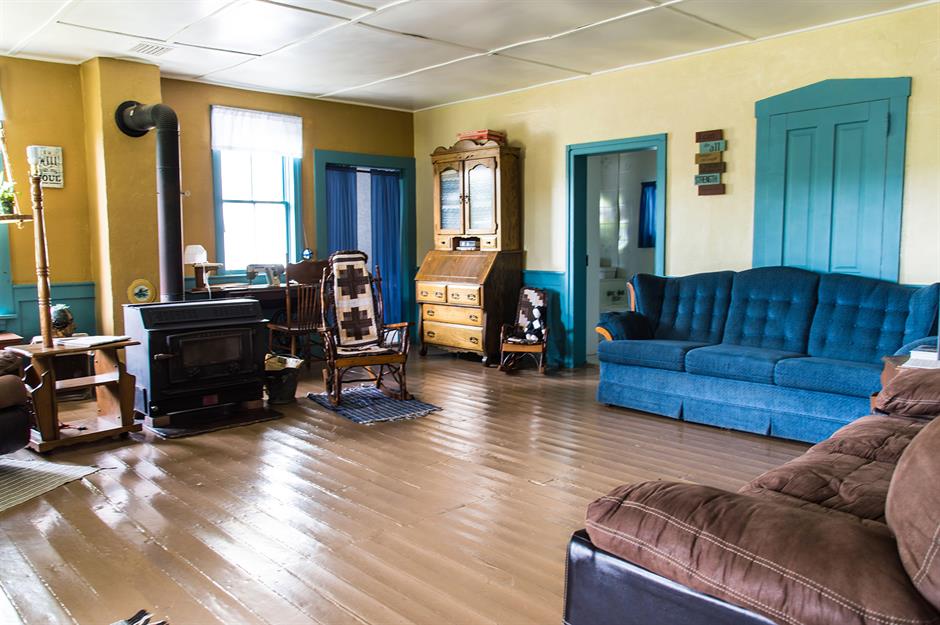
Amish homes, like their furnishings, are usually simple and unadorned, with a focus on functionality and practicality. Of course, Amish houses have no electricity, relying instead on wood-burning stoves for heat, and on gas lamps for light in the evenings.
Furnishings are simple and comfortable, often handmade by the Amish themselves, and designed to accommodate large families and multiple generations under one roof.
The Amish influence
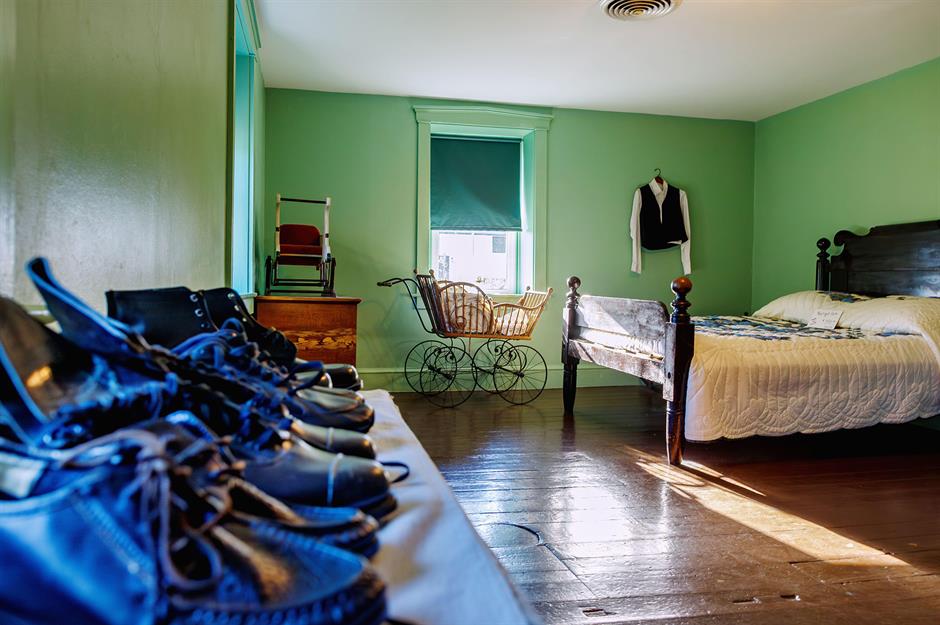
In fact, the Amish interior aesthetic has become widely popular and has been much emulated by interior designers and furniture manufacturers all over the world.
Praised for their simplicity, functionality, and focus on natural materials, Amish homes have influenced interior trends such as minimalism, ‘rustic chic,’ ‘cottage core’ and modern farmhouse style, and production trends towards sustainability and the use of natural materials.
Sponsored Content
Special recipes
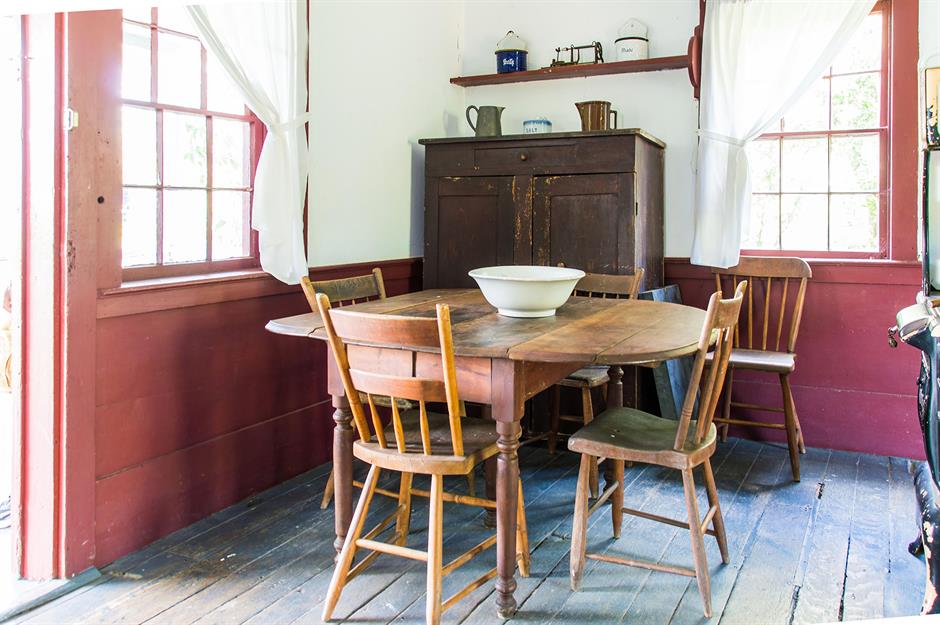
The Amish are also famous for their cooking. Baked goods in particular, including special recipes like friendship bread and shoofly pie, have become widely popular, and selling these bakes can be another prominent source of income for Amish families.
One Amish cook by the name of Elizabeth Coblentz published numerous cookbooks and newspaper columns with her recipes, which have been released all over the world, and have made her internationally famous.
Loved this? Now discover more incredible homes throughout history